
 Instrument type: LIDAR
Measured species: atmospheric temperature, wind, and iron density between ~20 km and ~ 90 km
Mission participation: SouthTRAC (2019), WAVEGUIDE (2026)
Instrument PI: DLR-PA
ALIMA is an upward pointing powerful iron-resonance and Rayleigh lidar system for airborne measurements in the middle atmosphere, including the stratosphere, mesosphere, and lower thermosphere. The instrument probes the iron line at 372 nanometres.
Link to instrument webpage:
https://www.dlr.de/en/pa/research-transfer/research-infrastructure/instruments/alima
References:
> Rapp, M., et al., (2021): SOUTHTRAC-GW: An Airborne Field Campaign to Explore Gravity Wave Dynamics at the World’s Strongest Hotspot. Bull. Amer. Meteor. Soc., 102, E871–E893, doi: 10.1175/BAMS-D-20-0034.1.
(Image: ALIMA instrument aboard HALO || Credit: C. Michael Volk, University of Wuppertal)
Instrument type: Radiometer
Measured species: solar & terrestrial irradiance
Mission participation: (TBA)
Instrument PI: Univ. Leipzig
A set of broadband radiometer measuring upward and downward irradiance in the solar (0.2 – 3.6 micrometer) and terrestrial (4.5 – 42 micrometer) spectral range.
References:
> Ehrlich, A., et al., (2023): A new airborne broadband radiometer system and an efficient method to correct dynamic thermal offsets, Atmos. Meas. Tech., 16, 1563–1581, doi: 10.5194/amt-16-1563-2023.
 Instrument type: integrated path differential absorption (IPDA) lidar
Measured species: column concentrations of CO2 and CH4
Mission participation: CoMet (2018), CoMet 2.0 Arctic (2022), CoMet 3.0 Tropics (2026)
Instrument PI: DLR-PA
This unique lidar system is capable of measuring the column concentration of the two most important anthropogenically influenced greenhouse gases, carbon dioxide (CO2) and methane (CH4), below the aircraft at the same time. CHARM-F was developed as a scientific instrument to help understanding the distribution of those greenhouse gases on local and regional scales and their cycles, but also as an airborne demonstrator for the German-French methane mission MERLIN.
Link to instrument webpage:
https://www.dlr.de/en/pa/research-transfer/research-infrastructure/instruments/charm-f
References:
> Amediek A. et al., (2017): CHARM-F – a new airborne integrated-path differential-absorption lidar for carbon dioxide and methane observations: measurement performance and quantification of strong point source emissions, Appl. Opt. 56, 5182-519, doi: 10.1364/AO.56.005182.
(Image: CHARM-F, integrated in HALO || Credit: ©DLR)
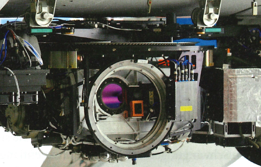 Instrument type: limb-viewing imaging Fourier transform spectrometer (FTS)
Measured species: temperature, trace-gas concentrations, as well as information on aerosol and cloud
Mission participation: TACTS/ESMVal (2012), POLSTRACC/GW-LCYCLE/SALSA (2015/16), WISE (2017), SouthTRAC (2019)
Instrument PI: FZ Jülich / KIT
With the Gimbaled Limb Observer for Radiance Imager of the Atmosphere (GLORIA) instrument the first and only limb-viewing imaging Fourier transform spectrometer (FTS) operated on board of high altitude research aircraft (HALO) to derive 2- and 3-D distribution of atmospheric parameters.
Link to instrument webpage:
https://www.fz-juelich.de/en/ite/science/research_areas/earth-environment/gloria-fts
References:
> Riese, M. et al. (2014): Gimballed Limb Observer for Radiance Imaging of the Atmosphere (GLORIA) scientific objectives, Atmos. Meas. Tech., 7, 1915–1928, doi: 10.5194/amt-7-1915-2014
> Friedl-Vallon, F. et al., (2014): Instrument concept of the imaging Fourier transform spectrometer GLORIA, Atmos. Meas. Tech., 7, 3565–3577, doi: 10.5194/amt-7-3565-2014.
(Image: The GLORIA instrument is mounted outside the research aircraft HALO || Copyright: FZJ)
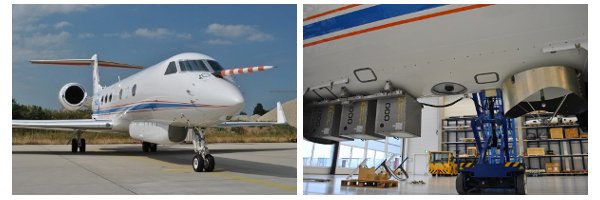
Instrument type: mono-static, pulsed magnetron radar (35 GHz)
Measured species: Radar reflectivity; Linear Depolarization ratio –> Derived products: Cloud objects, Cloud fraction
Mission participation: (TBA)
Instrument PI: Cologne University / Hamburg University / DLR-PA/ MPI-M (Hamburg)
HAMP MIRA is comprised of a nadir-pointing polarized cloud radar operating at 35.5GHz, and three modules of nadir-pointing radiometers operating over 26 frequencies in five bands. The radar MIRA-36 is a monostatic, pulsed, magnetron, Ka band, Doppler radar that operates at 35.5GHz. Using this frequency is possible because the HALO aircraft and its belly pod is sufficiently large to accommodate the relatively large antenna required at this frequency. The radar has two receivers to provide a co- and cross-polarization channel.
Link to instrument webpage:
https://www.mi.uni-hamburg.de/arbeitsgruppen/atmosphaerenmessungen/projekte/hamp.html
https://mpimet.mpg.de/en/research/observations/research-aircraft-halo
References:
> Ewald, F. et al., (2019): Calibration of a 35 GHz airborne cloud radar: lessons learned and intercomparisons with 94 GHz cloud radars, Atmos. Meas. Tech., 12, 1815–1839, doi: 10.5194/amt-12-1815-2019.
> Mech et al., (2014): HAMP – the microwave package on the High Altitude and LOng range research aircraft (HALO), Atmos. Meas. Tech., 7, 4539–4553, doi:10.5194/amt-7-4539-2014.
(Image: from https://www.mi.uni-hamburg.de/arbeitsgruppen/atmosphaerenmessungen/projekte/hamp.htm || credit: Univ. Hamburg)
Instrument type: Microwave radiometers in: K-band (22- 31 GHz), V-band (50 – 58 GHz), W-band (90 GHz), F-band (119 GHz), and G-band (183 GHz)
Measured species: Brightness Temperature –> Derived products: Liquid water path, Rain water path, Water vapour profiling, Water condensate (liquid/ice) path Temperature profiling
Mission participation: (tba)
Instrument PI: Cologne University / Hamburg University / DLR-PA/ MPI-M (Hamburg)
HAMP MIRA is comprised of a nadir-pointing polarized cloud radar operating at 35.5GHz, and three modules of nadir-pointing radiometers operating over 26 frequencies in five bands. The modules contain
(1) two independent packages with parallel antenna axis for the K and V bands. (Both units are direct detection filter bank receivers);
(2) two independent receiver packages: one direct detection radiometer (90GHz) and one heterodyne receiver in double-sideband mode (four channels along the 118.75GHz O2 line from ±1.4 to ±8.5GHz);
(3) a single heterodyne receiver providing seven channels along the 183.31GHz H2O line (±0.6 to ±12.5GHz, double side band).
The radiometers view the atmosphere through existing apertures in the belly pod, which are covered by window material with low microwave attenuation.
Link to instrument webpage:
https://www.mi.uni-hamburg.de/arbeitsgruppen/atmosphaerenmessungen/projekte/hamp.html
https://mpimet.mpg.de/en/research/observations/research-aircraft-halo
References:
> Mech et al., (2014): HAMP – the microwave package on the High Altitude and LOng range research aircraft (HALO), Atmos. Meas. Tech., 7, 4539–4553, doi:10.5194/amt-7-4539-2014.
(Image: from https://www.mi.uni-hamburg.de/arbeitsgruppen/atmosphaerenmessungen/projekte/hamp.htm || credit: Univ. Hamburg)
Instrument type: passive spectroradiometers
Measured species: spectral actinic
flux densities and photolysis frequencies in the atmosphere
Mission participation: (TBA)
Instrument PI: FZJ / Univ. Leipzig
The receivers are composed of a stack of sandblasted, elongate quartz domes covering a quartz rod in aluminium housing. Radiation that enters the receiver is multiply scattered and partly transmitted by the quartz domes until it reaches a sandblasted surface at the bottom of the quartz rod. This surface forms a virtual light source that can be captured by an optical fibre, eventually guiding the radiation to a spectroradiometer or other detectors.
References:
> Bohn, B. and Lohse, I. (2017): Calibration and evaluation of CCD spectroradiometers for ground-based and airborne measurements of spectral actinic flux densities, Atmos. Meas. Tech., 10, 3151–3174, doi: 10.5194/amt-10-3151-2017.
(Measurement principle)
> Junkermann, W., Platt, U.,and Volz-Thomas, A. (1989): A photoelectric detector for the measurement of photolysis frequencies of ozone and other atmospheric molecules. J Atmos Chem 8, 203–227 (1989). doi: 10.1007/BF00051494
Instrument type: dopplar wind lidar
Measured species: horizontal wind vector below the aircraft
Mission participation: NAWDIC (2026)
Instrument PI: DLR-PA
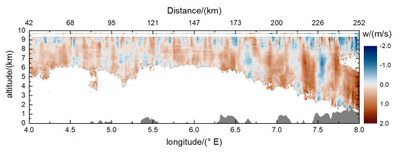
HEDWIG is a novel 1.6-µm Doppler wind lidar instrument for HALO.
Link to instrument webpage:
previous instrument, operated ion the DLR-FALCON aircraft; DLR’s coherent Doppler wind lidar (2 µm DWL)
References:
(previous instrument, operated ion the DLR-FALCON aircraft; DLR’s coherent Doppler wind lidar (2 µm DWL):
> Witschas et al., 2017: Airborne Wind Lidar Measurements of Vertical and Horizontal Winds for the Investigation of Orographically Induced Gravity Waves. J. Atmos. Oceanic Technol., 34, 1371–1386, doi:10.1175/JTECH-D-17-0021.1.
(Image: Example for atmospheric gravity waves. The inflow is from the west (left). The „breaking“ of the longer waves at the tropopause is very nice to be seen at an altitude of 8 – 8.5 km. || Credit: DLR (CC BY-NC-ND 3.0)
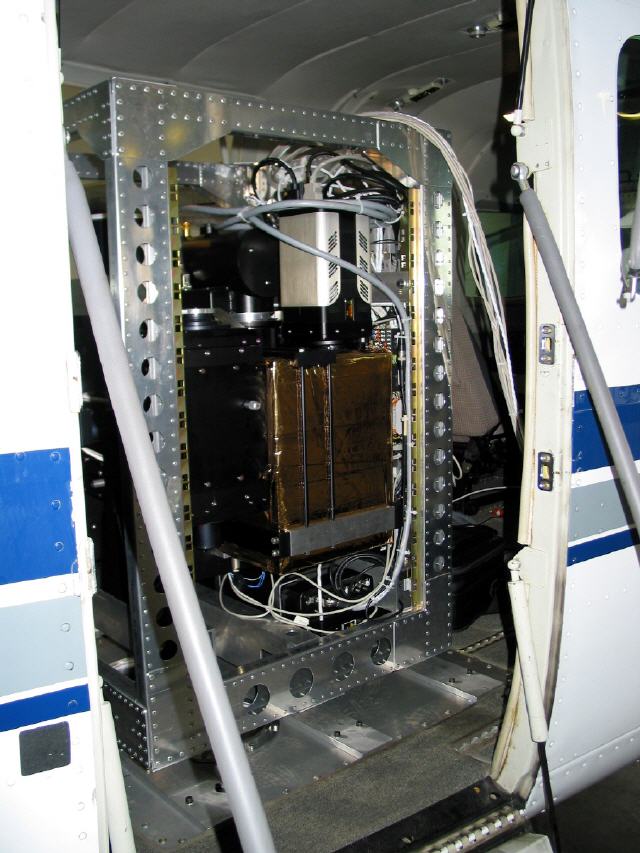 Instrument type: 2 channel solar backscatter absorption spectroscopy
Measured species: methane (CH4), carbon dioxide (CO2), and oxygen (O2)
Mission participation: (TBA)
Instrument PI: Bremen University
The spectrometer covers important parts of the near infrared (NIR) / short wave infrared (SWIR) spectral region (around 1600 nm, 1660 nm and 760 nm) for CO2, CH4 and O2 measurements. The instrument has been designed for flexible operation on board of different airborne research platforms. The instrument is designed to measure the column averaged mixing ratio of CH4 and CO2 (i.e., XCH4 and XCO2) with a relative accuracy and precision of equal or better than ~1% with respect to the atmospheric background concentration.
Link to instrument webpage:
https://www.iup.uni-bremen.de/optronics/mamap-airborne-remote-sensing-of-greenhouse-gases/index.htm
References:
> Huhs, o., et al., (2026): Impact of stray light on greenhouse gas concentration retrievals and emission estimates as observed with the passive airborne remote sensing imager MAMAP2D-Light, Atmos. Meas. Tech., 19, 871–898, doi:10.5194/amt-19-871-2026.
> Gerilowski, K. et al., (2011): MAMAP – a new spectrometer system for column-averaged methane and carbon dioxide observations from aircraft: instrument description and performance analysis, Atmos. Meas. Tech., 4, 215–243, doi:10.5194/amt-4-215-2011.
(Image: from https://www.iup.uni-bremen.de/optronics/mamap-airborne-remote-sensing-of-greenhouse-gases/index.htm || credit: Bremen University)
Instrument type: passive optical spectrometer
Measured species:
UV: O3, BrO, OClO, CH2O, and O4
VIS: O3, O4, NO2, H2O, IO, and C2H2O2
Mission participation: (TBA)
Instrument PI: Heidelberg University
A six-channel optical spectrometer for airborne nadir and limb measurements of atmospheric trace gases, liquid and solid water, and spectral radiances in the UV/vis and NIR spectral ranges.
References:
> Hüneke, T. et al., (2017): The novel HALO mini-DOAS instrument: inferring trace gas concentrations from airborne UV/visible limb spectroscopy under all skies using the scaling method, Atmos. Meas. Tech., 10, 4209–4234, doi:10.5194/amt-10-4209-2017.
Instrument type: imaging spectroscopy
Measured species: cloud and aerosol optical properties and atmospheric trace gases.
Mission participation: (TBA)
Instrument PI: LMU Munich
With its high spectral and spatial resolution, the instrument is designed to measure solar radiation in the visible and shortwave infrared region that is reflected from, or transmitted through clouds and aerosol layers. It is based on two hyperspectral cameras that measure in the solar spectral range between 400 and 2500 nm with a spectral bandwidth between 2.5 and 12.0 nm.
Link to instrument webpage:
[German only]
https://www.meteo.physik.uni-muenchen.de/aktuelles/forschungshighlights_archiv/specmacs_bei_narval_nawdex/index.html
https://www.meteorologie.lmu.de/DokuWiki/doku.php?id=arbeitsgruppen:wolkenspektrometer
References:
> Bony, S., Stevens, B., Ament, F. et al., (2017): EUREC4A: A Field Campaign to Elucidate the Couplings Between Clouds, Convection and Circulation, Surv Geophys 38: 1529. doi: 10.1007/s10712-017-9428-0
> Ewald, f. et al., (2016): Design and characterization of specMACS, a multipurpose hyperspectral cloud and sky imager, Atmos. Meas. Tech., 9, 2015–2042, doi:10.5194/amt-9-2015-2016
> Kölling, T., T. Zinner, B. Mayer, (2019): Aircraft-based stereographic reconstruction of 3-D cloud geometry, Atmos. Meas. Tech., 12, 1155-1166, doi: 10.5194/amt-12-1155-2019, 2019.
 Instrument type: optical spectrometer
Measured species: downward irradiances between 300 nm and 2200 nm
Mission participation: (TBA)
Instrument PI: Univ. Leipzig
The Spectral Modular Airborne Radiation measurement sysTem (SMART) measures downward irradiances in the solar spectral range between 300 nm and 2200 nm. The downwelling and upwelling radiation is collected by four optical inlets and transferred by optical fibers to grating spectrometers dispersing the incident radiation, which is then detected by a single-line photodiode array. An active horizontal stabilization of the optical inlets is applied to correct for aircraft movement. Two optical shutters allow for simultaneous dark measurements (thermally induced current and electronic offset), which is necessary for the Shortwave-Infrared spectrometers.
Link to instrument webpage:
https://www.physes.uni-leipzig.de/en/institute-for-meteorology/research/workinggroupatmosphericradiation/research/measuringprinciplesandinstrumentation
References:
> Wendisch, M., D. Müller, D. Schell, and J. Heintzenberg, (2001): An Airborne Spectral Albedometer with Active Horizontal Stabilization. J. Atmos. Oceanic Technol., 18, 1856–1866, doi: 10.1175/1520-0426(2001)018<1856:AASAWA>2.0.CO;2.
> Wolf, K., et al. (2020): Evaluation of ECMWF Radiation Scheme Using Aircraft Observations of Spectral Irradiance above Clouds. J. Atmos. Sci., 77, 2665–2685, doi: 10.1175/JAS-D-19-0333.1.
(Image: SMART albedometer installed in the polar aircraft (top) and a towed platform with SMART-HELIOS (bottom). || credit: André Ehrlich / University of Leipzig, Frank Werner )
Instrument type: thermal-infrared imager
Measured species: Brightness temperature, Radiance
Mission participation: (TBA)
Instrument PI: Univ. Leipzig
The thermal-infrared imager VELOX onboard HALO provides two-dimensional (2D) cloud-top or surface brightness temperature (BT) fields. The imager has a field of view of 35.5° by 28.7° (640 by 512 spatial pixels) yielding a spatial resolution of 10 m at a target distance of 10 km. The brightness temperature is measured in six spectral bands in the thermal-infrared wavelength range from 7.7 to 12.0 µm.
Link to instrument webpage:
https://www.physes.uni-leipzig.de/en/institute-for-meteorology/research/workinggroupatmosphericradiation/research/measuringprinciplesandinstrumentation
References:
> Schäfer, M., et al. (2022): VELOX – a new thermal infrared imager for airborne remote sensing of cloud and surface properties, Atmos. Meas. Tech., 15, 1491–1509, doi: 10.5194/amt-15-1491-2022.
 Instrument type: multi-wavelength H2O-DIAL (differential absorption lidar)
Measured species: water vapor profiles from the lower stratosphere to the planetary boundary layer
Mission participation: NAWDIC (2026), ASCCI (2025), PERCUSION (2024), HALO-(AC)3 (2021), CIRRUS-HL (2021), EUREC4A (2020), WISE (2017), NAWDEX (2016), NARVAL 2 (2016), POLSTRACC/GW-LCYCLE/SALSA (2015/16), ML-CIRRUS (2014)
Instrument PI: DLR-PA
This high-performance airborne water vapor differential absorption lidar uses a four-wavelength/three-absorption line measurement scheme in the 935 nm H2O absorption band to cover the whole troposphere and lower stratosphere simultaneously. Additional high spectral resolution aerosol and depolarization channels allow precise aerosol characterization.
Link to instrument webpage:
https://www.dlr.de/en/pa/research-transfer/research-infrastructure/instruments/wales
References:
>Wirth, M., Fix, A., Mahnke, P. et al. (2009): The airborne multi-wavelength water vapor differential absorption lidar WALES: system design and performance. Appl. Phys. B 96, 201–213, doi: 10.1007/s00340-009-3365-7.
(Image: H2O-DIAL || Credit: ©DLR)
 Instrument type: single particle laser ablation instrument
Measured species: composition of aerosol particles and cloud residuals
Mission participation: CAFE-AFRICA (2018), CIRRUS-HL (2021), HALO-South (2025)
Instrument PI: MPI-C (Mainz)
The ALABAMA is a single particle laser ablation instrument that was developed especially for aircraft operation onboard HALO.
Link to instrument webpage:
https://www.mpic.de/3578579/ALABAMA
References:
> Clemen, H.-C. et al., (2020): Optimizing the detection, ablation, and ion extraction efficiency of a single-particle laser ablation mass spectrometer for application in environments with low aerosol particle concentrations, Atmos. Meas. Tech., 13, 5923–5953, https://doi.org/10.5194/amt-13-5923-2020.
> Brands, M. et al., (2020): Characterization of a Newly Developed Aircraft-Based Laser Ablation Aerosol Mass Spectrometer (ALABAMA) and First Field Deployment in Urban Pollution Plumes over Paris During MEGAPOLI 2009, Aerosol Sci. Technol., 45, 46-64, doi: 10.1080/02786826.2010.517813.
(Image: The ALABAMA in its first HALO rack configuration (2010). || Credit: J. Schneider, MPIC.)
 Instrument type: Aerosol Mass Spectrometer
Measured species: size and chemical mass loading information for non-refractory sub-micron aerosol particles
Mission participation: ACHRIDICON-CHUVA (2014), EMeRGe-EU (2017), EMeRGe-Asia (2018), CAFE-Africa (2018), BLUESKY (2020), CAFE-Brazil (2022/23), CAFE-Pacific (2024), HALO-South (2025)
Instrument PI: MPI-C (mainz)
The instrument has been designed to provide real-time quantitative information on size-resolved mass loadings for volatile and semi-volatile molecular components present in/on ambient aerosol particles.
Link to instrument webpage:
https://www.mpic.de/3578524/c-tof-ams1
References:
Basic instrument description:
> Drewnick, Fet al., (2005): A new Time-of-Flight Aerosol Mass Spectrometer (TOF-AMS) : Instrument Description and First Field Deployment, Aerosol Science & Technology 39, 637-658, doi:10.1080/02786820500182040.
Aircraft application:
> Schmale, J. et al., (2010): Aerosol layers from the 2008 eruptions of Mt. Okmok and Mt. Kasatochi: In-situ UT/LS measurements of sulfate and organics over Europe, J. Geophys. Res., 115, D00L07, doi:10.1029/2009JD013628.
> Schmale, J. et al., (2011): Source identification and airborne chemical characterisation of aerosol pollution from long-range transport over Greenland during POLARCAT summer campaign 2008, Atmos. Chem. Phys., 11, 10097-10123, doi:10.5194/acp-11-10097-2011.
> Schulz, C. et al., (2018): Aircraft-based observations of isoprene-epoxydiol-derived secondary organic aerosol (IEPOX-SOA) in the tropical upper troposphere over the Amazon region, Atmos. Chem. Phys., 18, 14979-15001, doi:10.5194/acp-18-14979-2018.
(Image: C-ToF-AMS in HALO rack during EMeRGe (2017). || Credit: J. Schneider, MPIC.)
Instrument type: Absorption Spectrometer
Measured species: Particle size distribution/number concentration (12 nm – 3µm)
Mission participation: (TBA)
Instrument PI: DLR-PA
This instrument consists of a CPC, an OPC, a PSAP, and a DMA. Particles with diameters larger than 12 nm are measured using a Condensation Particle Counter (CPC; model Grimm SkyCPC 5.410), while an Optical Particle Counter (OPC; model SkyOPC 1.129) is employed for larger particle sizes. The operation principle is based on the detection of forward scattered light from a laser beam, similar to the principle of forward scattering cloud probes.
References:
> De La Torre Castro, E., et al., (2026): A combined observational and modelling approach to evaluate aerosol–cirrus interactions at high and mid-latitudes, Atmos. Chem. Phys., 26, 5879–5899, doi: 10.5194/acp-26-5879-2026.
Instrument type: Optical Spectrometer
Measured species: Droplet and ice crystal size and asphericity (phase) (2 – 42 μm)
Mission participation: (TBA)
Instrument PI: DLR-PA
The BCPD is a derivative of the Backscatter Cloud Probe (BCP ). The BCPD features a polarization filter which allows for the differentiation between spherical and aspherical particles.
References:
> Lucke, J., Jurkat, T., Baumgardner, D., Kalinka, F., et al. (2024): Characterization of Atmospheric Icing Conditions during the HALO-(AC) 3 Campaign with the Nevzorov Probe and the Backscatter Cloud Probe with Polarization Detection, SAE Int. J. Adv. & Curr. Prac. in Mobility 6(3):1224-1237, doi: 10.4271/2023-01-1485.
Instrument type: continuous-flow streamwise thermal gradient CCN
counter
Measured species: Cloud Condensation Nuclei
Mission participation: (TBA)
Instrument PI: MPI-C (Mainz)
This instrument consists of a continuous-flow streamwise thermal gradient CCN counter (CCNC, model CCN-200, DMT, Longmont, CO, USA). It consists of two columns, in which particles with critical supersaturations (S) above a preselected value are activated and form water droplets. Droplets with diameters ≥1µm are detected by an OPC at the exit of the column.
References:
Basic instrument description:
> Roberts, G. C., & Nenes, A. (2005). A Continuous-Flow Streamwise Thermal-Gradient CCN Chamber for Atmospheric Measurements. Aerosol Science and Technology, 39(3), 206–221. doi: 10.1080/027868290913988
> Rose, D., et al., (2008): Calibration and measurement uncertainties of a continuous-flow cloud condensation nuclei counter (DMT-CCNC): CCN activation of ammonium sulfate and sodium chloride aerosol particles in theory and experiment, Atmos. Chem. Phys., 8, 1153–1179, doi: 10.5194/acp-8-1153-2008.
Aircraft application:
> Andreae, M. O., et al., (2018): Aerosol characteristics and particle production in the upper troposphere over the Amazon Basin, Atmos. Chem. Phys., 18, 921–961, doi: 10.5194/acp-18-921-2018
Instrument type: time-of-flight mass spectrometry
Measured species: Chemical composition of Aerosols
Mission participation: (TBA)
Instrument PI: MPI-C (Mainz) & Mainz University
ERICA combines (i) the laser desorption and ionization technique, or laser ablation technique, for single-particle mass spectrometry and (ii) a combination of thermal particle desorption, also called flash vaporization, and electron impact ionization. The same aerosol sample flow is analyzed using both methods simultaneously, each using time-of-flight mass spectrometry.
References:
> Hünig, A., et al., (2022): Design, characterization, and first field deployment of a novel aircraft-based aerosol mass spectrometer combining the laser ablation and flash vaporization techniques, Atmos. Meas. Tech., 15, 2889–2921, doi: 10.5194/amt-15-2889-2022.
> Dragoneas, A., et al., (2022): The realization of autonomous, aircraft-based, real-time aerosol mass spectrometry in the upper troposphere and lower stratosphere, Atmos. Meas. Tech., 15, 5719–5742, doi: 10.5194/amt-15-5719-2022.
Instrument type: ultrafine condensation particle counter
Measured species: newly formed particles
Mission participation: (TBA)
Instrument PI: MPI-C (Mainz) & TROPOS
The Fast Aerosol Size Distribution (FASD) instrument is a compact multichannel system to detect newly formed particles. It was developed specifically for operation aboard the HALO aircraft. FASD is a package of aerosol instruments combined in a HALO rack. It contains ten condensation particle counters (CPCs) operated with variable lower cut-off sizes between 2.5 and 20 nm, a UHSAS (70-500 nm), an optical particle size spectrometer (Sky-OPC, 0.3-5 μm).
References:
> Curtius, J., Heinritzi, M., Beck, L.J. et al. (2024): Isoprene nitrates drive new particle formation in Amazon’s upper troposphere. Nature 636, 124–130 doi: 10.1038/s41586-024-08192-4.
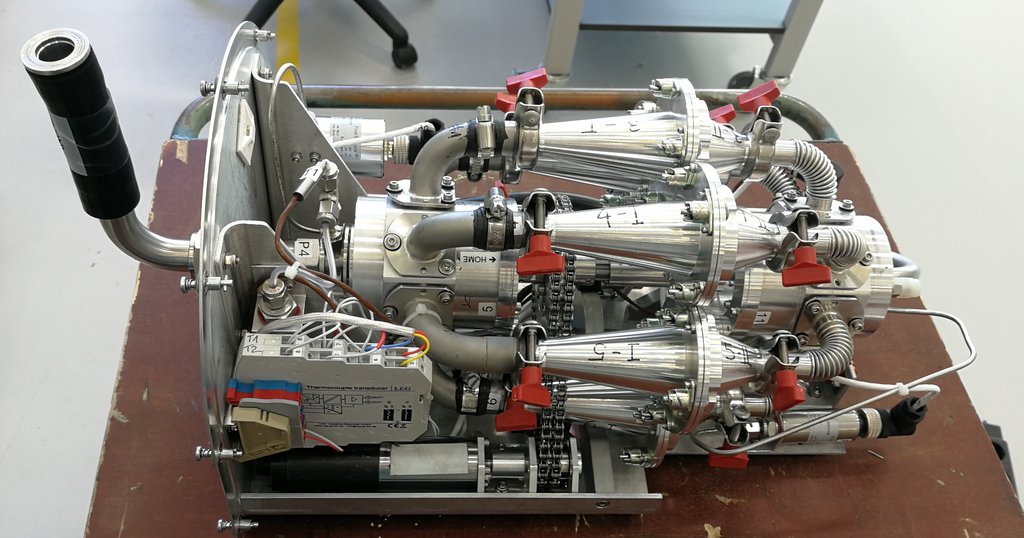 Instrument type: Particle collection system
Measured species: Particles smaller than 7 µm
Mission participation: (TBA)
Instrument PI: TROPOS
HERA consists of a sampling unit and pump unit. The sampling unit is connected to an inlet, through which ambient aerosol particles are collected. If available, HERA can also sample from a second inlet, e.g., for in-cloud sampling of residual particles. After a research flight, the filter insert is removed from the aircraft and sealed for transport to the laboratory for further analysis.
Link to instrument website:
https://www.tropos.de/en/research/projects-infrastructures-technology/technology-at-tropos/aerosolpartikel-filtersammler-fuer-luftgetragene-anwendungen
References:
> Grawe, S., et al., (2023): Next-generation ice-nucleating particle sampling on board aircraft: characterization of the High-volume flow aERosol particle filter sAmpler (HERA), Atmos. Meas. Tech., 16, 4551–4570, doi: 10.5194/amt-16-4551-2023.
(Image: HERA filter switching unit. || Credit: Sarah Grawe/TROPOS.)
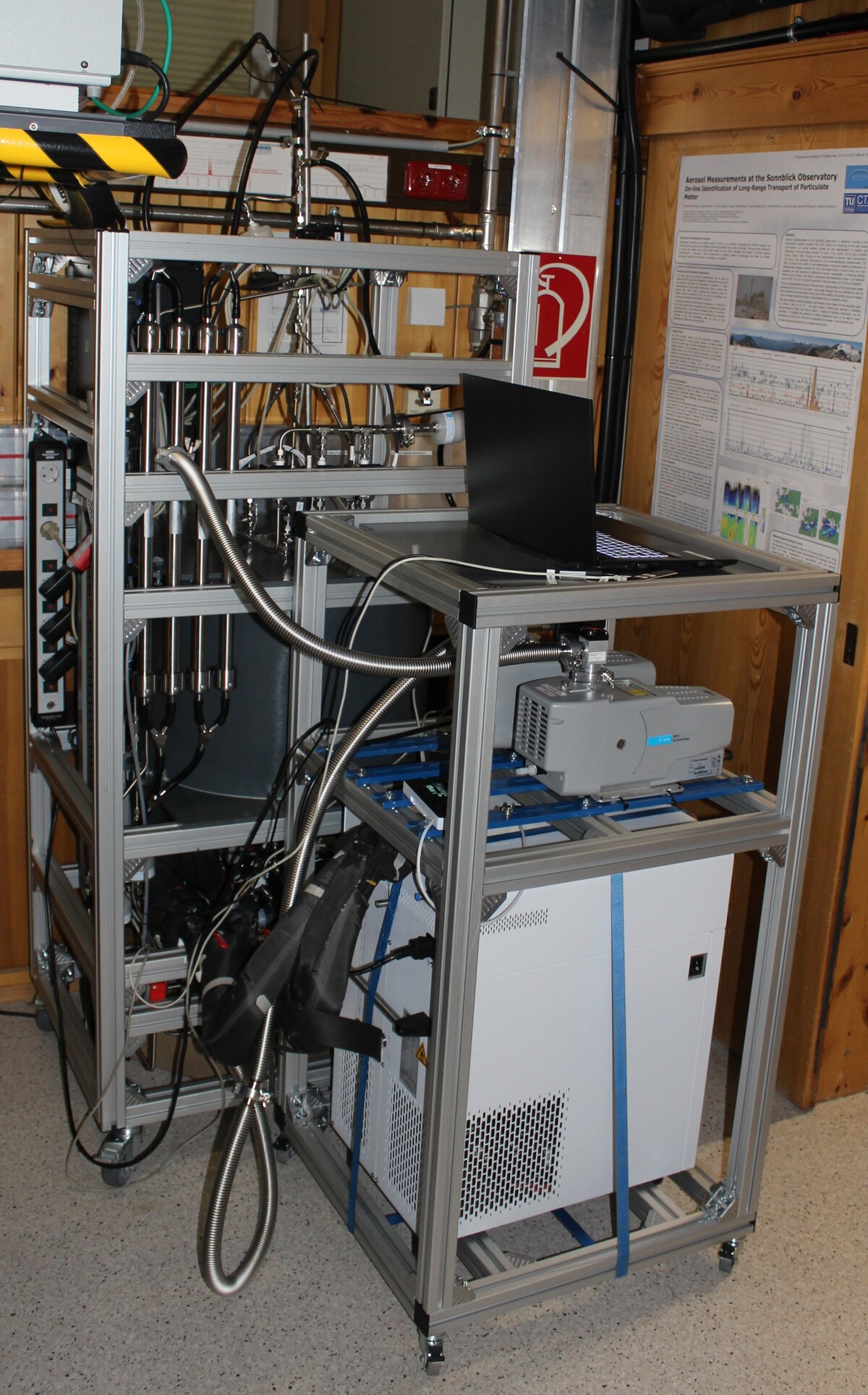 Instrument type: temperature-controlled cloud chamber
Measured species: ice nucleating particles
Mission participation: (TBA)
Instrument PI: KIT & Frankfurt University
PINE also uses the principle of pressure reduction by controlled pumping of air out of the cloud chamber to cause the aerosol particles, which are present in the chamber prior to the expansion, to act as cloud condensation nuclei (CCN) and/or INPs to form liquid cloud droplets and ice crystals, depending on the temperature, ice supersaturation and the type of aerosol. Large aerosol particles, droplets and ice crystals are measured and counted with an optical particle counter (OPC).
Link to instrument webpage:
https://www.imkaaf.kit.edu/1932.php
References:
> Möhler, O. et al., (2021): The Portable Ice Nucleation Experiment (PINE): a new online instrument for laboratory studies and automated long-term field observations of ice-nucleating particles, Atmos. Meas. Tech., 14, 1143–1166, doi: 10.5194/amt-14-1143-2021.
(Image: PINEair at Sonnblick Observatory || Credit: KIT/ Dr. Pia Bogert)
Instrument type: Photometer
Measured species: rBC single particle masses and bulk aerosol absorption coefficients at 3 wavelengths
Mission participation: HALO-South
Instrument PI: DLR-PA
The system includes a single-particle soot photometer extended range (SP2xr; Droplet Measurement Technologies) instrument and two tricolor absorption photometers (TAPs; Brechtel Inc)
References:
t.b.a.
Instrument type: optical-scattering, laser-based particle spectrometer system
Measured species: aerosol particle size distribution (90 to 500 nm)
Mission participation: (TBA)
Instrument PI: MPI-C (Mainz)
The UHSAS combines a high-power infrared laser (λ=1054nm) and a large solid angle range in a side ways direction for the detection of light scattered by individual particles. Due to the resulting almost-monotonic increase of instrument response with particle size, the UHSAS enables high- resolution measurements (100 selectable channels).
References:
> Andreae, M. O. et al., (2018): Aerosol characteristics and particle production in the upper troposphere over the Amazon Basin, Atmos. Chem. Phys., 18, 921–961, doi: 10.5194/acp-18-921-2018.
> Mei, F. et al., (2020): Comparison of aircraft measurements during GoAmazon2014/5 and ACRIDICON-CHUVA, Atmos. Meas. Tech., 13, 661–684, doi: 10.5194/amt-13-661-2020.
Instrument type: Chemiluminescence detector
Measured species: Total reactive nitrogen (NOy)
Mission participation: (TBA)
Instrument PI: DLR-PA
The AENEAS (AtmosphEric Nitrogen oxides mEAsuring System) instrument measures total reactive nitrogen. Total reactive nitrogen (NOy) is the sum of all reactive nitrogen species in the atmosphere, namely NO, NO2, HNO3, PAN, HNO2, HNO4, N2O5, ClONO2, and others. The detection of total reactive nitrogen is based on a well-established technique, comprising catalytic conversion and chemiluminescence.
References:
> Ziereis, H. et al., (2022): Redistribution of total reactive nitrogen in the lowermost Arctic stratosphere during the cold winter 2015/2016, Atmos. Chem. Phys., 22, 3631–3654, doi:10.5194/acp-22-3631-2022.
Instrument type: Mass spectrometer
Measured species: H2O or HCl, HNO3, SO2 and HONO
Mission participation: (TBA)
Instrument PI: DLR-PA
AIMS uses SF5− reagent ions for the simultaneous measurement of trace gas concentrations of HCl, HNO3 and SO2 in the pptv to ppmv (10−12 to 10−6 mol mol−1) range with in-flight and online calibration (AIMS-TG). In the AIMS-H2O configuration, air is directed through the gas discharge region where ion–molecule reactions lead to the production of hydronium ion clusters, H3O+(H2O)n (n = 0, 1, 2), in a complex reaction scheme similar to the reactions in the D-region of the ionosphere. These ions are counted to quantify the ambient water vapor mixing ratio.
References:
> Kaufmann et al., (2016): The airborne mass spectrometer AIMS – Part 1: AIMS-H2O for UTLS water vapor measurements, Atmos. Meas. Tech., 9, 939–953, doi:10.5194/amt-9-939-2016.
> Jurkat et al., (2016): The airborne mass spectrometer AIMS – Part 2: Measurements of trace gases with stratospheric or tropospheric origin in the UTLS, Atmos. Meas. Tech., 9, 1907–1923, doi:10.5194/amt-9-1907-2016.
Instrument type: Off-Axis-Integrated-Cavity-Output-Spectroscopy (ICOS)
Measured species: OCS, CO2, CO, CH4and H2O (tropospheric)
Mission participation: (TBA)
Instrument PI: FZ Jülich
This spectrometer carries out high resolution carbonyl sulfide (OCS) measurements during aircraft campaigns to improve our understanding of the contribution of OCS to the stratospheric aerosol layer. It uses the Off-Axis-Integrated-Cavity-Output-Spectroscopy (ICOS) measurement technique to determine OCS, CO2, CO, CH4 and tropospheric H2O.
Link to instrument webpage:
https://www.fz-juelich.de/en/ice/ice-4/research/synergetic-use-of-instruments-and-models/halo
References:
> Kloss, C. et al., (2021), Airborne Mid-Infrared Cavity enhanced Absorption spectrometer (AMICA), Atmos. Meas. Tech., 14, 5271–5297, doi:10.5194/amt-14-5271-2021
Instrument type: Laser absorption spectrometer
Measured species: CO, CH4, N2O
Mission participation: t.b.a.
Instrument PI: MPI-Chemie, Mainz
ATTILA is a custom-built two-cell mid-infrared room-temperature quantum cascade laser absorption spectrometer. It is equipped with two room-temperature quantum cascade lasers that measure CO, CH4, and N2O in a two-cell system.
References:
> Ort, L., et al., (2024): In-flight characterization of a compact airborne quantum cascade laser absorption spectrometer, Atmos. Meas. Tech., 17, 3553–3565, doi: 10.5194/amt-17-3553-2024.
Instrument type: Chemiluminescence detector
Measured species: Ozone (O3)
Mission participation: (TBA)
Instrument PI: KIT
FAIRO’s sensitivity is ~9000 counts s−1 per ppbv of ozone. Its precision is entirely determined by the number of photons reaching the detector (being a photomultiplier), i.e. is quantum-noise limited. The relative precision (ΔO3/O3 in %) thus follows Poisson statistics and scales with the square root of the measurement frequency f and with the inverse O3 mixing ratio: ΔO3/O3 ∝ f0.5 · O3−0.5. At typical O3 mixing ratios between 10 and 100 ppbv (and 1 bar), the precision is 0.3–1.0% at f = 10 Hz. The maximum measurement frequency is 50 Hz.
References:
> Zahn A. et al., (2012): A fast and precise chemiluminescence ozone detector for eddy flux and airborne application, Atmos. Meas. Tech., 5, 363–375, doi:10.5194/amt-5-363-2012.
Instrument type: Lyman-α hygrometer
Measured species: total/gas-phase H2O
Mission participation: (TBA)
Instrument PI: FZ Jülich
The Lyman-α hygrometer FISH (Fast In-situ Stratospheric Hygrometer) is one of the most advanced and sensitive in-situ instruments world-wide for mea- suring water vapor in the UTLS. This climate-sensitive region has the lowest water vapor concentrations, making it a particular challenge for measuring in- struments. For almost three decades the instrument was flown on many different research aircraft and places around the world and measured water vapor and the ice water content of cirrus clouds.
Link to instrument webpage:
https://www.fz-juelich.de/en/ice/ice-4/research/synergetic-use-of-instruments-and-models/halo
https://www.fz-juelich.de/de/ice/ice-4/ueber-uns/wissinfra/fish
References:
> Meyer et al., (2015), Two decades of water vapor measurements with the FISH fluorescence hygrometer: a review, Atmos. Chem. Phys., 15, 8521–8538, doi:10.5194/acp-15-8521-2015.
> Zöger et al., (1999), Fast in situ stratospheric hygrometers: A new family of balloon-borne and airborne Lyman α photofragment fluorescence hygrometers. J. Geophys. Res., doi: 10.1029/1998JD100025.
Instrument type: in situ gas chromatography and mass spectrometry
Measured species: short-lived brominated source gases: CH2Br2, CHBr3, CH2ClBr, CHCl2Br and CHClBr2
Mission participation: (TBA)
Instrument PI: GU Frankfurt
GhOST-MS is a two-channel GC instrument. An electron capture detector (ECD) is used in an isothermal channel to measure SF6 and CFC-12 with a time resolution of 1 min. The second channel is temperature programmed and uses a cryogenic pre-concentration system and a mass spectrometer (MS) for detection. It measures halocarbons in the chemical ionization mode with a time resolution of 4 min.
References:
> Keber, T. et al., (2020): Bromine from short-lived source gases in the extratropical northern hemispheric upper troposphere and lower stratosphere (UTLS), Atmos. Chem. Phys., 20, 4105–4132, doi:10.5194/acp-20-4105-2020.
Instrument type: Gas chropatograph and mass spectrometer
Measured species: CH2Cl2, CHCl3, CH3Cl, CFC-11, CFC-113, HFC-125, HFC-134a, and iso- and n-pentane
Mission participation: (TBA)
Instrument PI: University of Wuppertal
HAGAR-V comprises a two-channel gas chromatograph (GC) with electron capture detection (ECD) as well as a non-dispersive infrared absorption module for the detection of CO2. It additionally comprises a mass spectrometer (MS) coupled to two GC channels which can thus be used either for the detection of a wide range of atmospheric trace gases (different target species on each channel) or to double the measurement frequency (same target species on both channels).
References:
> Lauther, V. et al., (2022): In situ observations of CH2Cl2 and CHCl3 show efficient transport pathways for very short-lived species into the lower stratosphere via the Asian and the North American summer monsoon, Atmos. Chem. Phys., 22, 2049–2077, doi:10.5194/acp-22-2049-2022.
> Lauther, V.: Airborne in situ measurements of short-lived chlorocarbons and investigation of their pathways from northern hemispheric source regions into the lowermost stratosphere, PhD thesis, Bergische Universität Wuppertal, doi:10.25926/KQVQ-HB36, 2020.
> Werner, A. et al., (2010): Quantifying transport into the Arctic lowermost stratosphere, Atmos. Chem. Phys., 10, 11623–11639, doi:10.5194/acp-10-11623-2010.
Instrument type: multi-phase water sensor
Measured species: water vapour and condensed water (simultaneously)
Mission participation: (tba)
Instrument PI: PTB Darmstadt
HAI is based on a special variant of TDLAS (Tunable Diode Laser Absorption Spectroscopy) which is self-calibrating. A robust, open and aerodynamic measuring cell located outside the aircraft body directly measures the gaseous water vapour content of the air flowing through it. Another two-channel measuring unit is located inside the aircraft, at the end of a heated sample collection tube where two sensors working independently of each other measure the total water content of the sample.
Link to instrument webpage:
Click to read information on HAI in a press release by PTB
References:
> Buchholz, B., et al., (2017): HAI, a new airborne, absolute, twin dual-channel, multi-phase TDLAS-hygrometer: background, design, setup, and first flight data, Atmos. Meas. Tech., 10, 35–57, doi: 10.5194/amt-10-35-2017.
 Instrument type: Chemical ionisation mass spectrometry
Measured species: PAN, PAA
Mission participation: t.b.a.
Instrument PI: MPI-Chemie, Mainz
Chemical ionisation mass spectrometry (CIMS) uses I− (the iodide anion) as a primary reactant ion to measure NO3 and N2O5.
Link to instrument webpage:
https://www.mpic.de/3562041/methods
References:
> Dörich, R., Eger, P., Lelieveld, J., and Crowley, J. N., (2021): Iodide CIMS and m∕z 62: the detection of HNO3 as NO3− in the presence of PAN, peroxyacetic acid and ozone, Atmos. Meas. Tech., 14, 5319–5332, doi: 10.5194/amt-14-5319-2021.
> Eger, P. G., et al., (2019): Chemical ionization quadrupole mass spectrometer with an electrical discharge ion source for atmospheric trace gas measurement, Atmos. Meas. Tech., 12, 1935-1954, doi: 10.5194/amt-12-1935-2019.
(Image: HALO-CIMS instrument; https://www.mpic.de/3562041/methods || Credit: MPI-C)
Instrument type: proton-transfer-reaction mass spectrometry (PTR-MS)
Measured species: VOCs
Mission participation: t.b.a.
Instrument PI: KIT, Karlsruhe
An ion source produces hydronium (H3O+) reagent ions which react with trace gases in the sample air within a drift tube (reaction chamber). Proton transfer takes place if the proton affinity of the target VOC is higher than that of H2O. VOCH+ and reagent ions are analysed in a quadrupole mass spectrometer (QMS) or via time-of-flight measurements (ToF).
References:
> Förster, E., et al., 2023: Chemical and dynamical identification of emission outflows during the HALO campaign EMeRGe in Europe and Asia, Atmos. Chem. Phys., 23, 1893–1918, doi: 10.5194/acp-23-1893-2023.
Instrument type: Laser-induced fluorescence (LIF)
Measured species: HOX
Mission participation: t.b.a.
Instrument PI: MPI-C, Mainz
This is the first airborne LIF-FAGE instrument measuring HOx with a dedicated inlet preinjector (IPI) system installed for the purpose of removing atmospheric OH, enabling real-time measurements and quantification of potential chemical background OH interferences, OH−CHEM. HORUS measures an off-resonance signal to discern the net OH fluorescence signal.
References:
> Marno, D., et al., (2021): Calibration of an airborne HOx instrument using the All Pressure Altitude-based Calibrator for HOx Experimentation (APACHE), Atmos. Meas. Tech., 13, 2711–2731, doi: 10.5194/amt-13-2711-2020.
> Martinez, M., et al., (2010):: Hydroxyl radicals in the tropical troposphere over the Suriname rainforest: airborne measurements, Atmos. Chem. Phys., 10, 3759–3773, doi: 10.5194/acp-10-3759-2010.
Instrument type: automated flask sampler
Measured species: CO2, CH4, N2O, H2, SF6
Mission participation: t.b.a.
Instrument PI: MPI-BGC, Jena
The device is equipped with 12 slots for holding 1 L glass flasks with automatically operated valves at both ends. Sample air, collected outside the aircraft fuselage with a dedicated inlet, flows into a drying unit filled with magnesium perchlorate, and a pump is used to flush and pressurise the flasks, up to approximately 1500 hPa. Flasks are collected after flight and analysed in a lab.
References:
> Gałkowski, M., et al., (2021): In situ observations of greenhouse gases over Europe during the CoMet 1.0 campaign aboard the HALO aircraft, Atmos. Meas. Tech., 14, 1525–1544, doi: 10.5194/amt-14-1525-2021.
Instrument type: wavelength-scanning cavity ring-down spectroscopy (CRDS)
Measured species:CO2, CO, CH4
Mission participation: t.b.a.
Instrument PI: MPI-BGC, Jena
The core method of the measurement is wavelength-scanning cavity ring-down spectroscopy (CRDS), whereby an infrared-wavelength laser light is injected into a high-finesse optical cavity. First, the strength of the incident laser beam gradually increases over time and thus increases the detector’s sensitivity. After reaching the designated signal level, the laser is turned off. The time constant of the resulting exponential decay (ring-down time) depends on the absorption coefficient of the measured compound for the laser wavelength, tuned so that the scan along selected individual spectral lines of the measured molecules is possible.
References:
> Gałkowski, M., et al., (2021): In situ observations of greenhouse gases over Europe during the CoMet 1.0 campaign aboard the HALO aircraft, Atmos. Meas. Tech., 14, 1525–1544, doi: 10.5194/amt-14-1525-2021.
> Chen, H., et al., (2010): High-accuracy continuous airborne measurements of greenhouse gases (CO2 and CH4) using the cavity ring-down spectroscopy (CRDS) technique, Atmos. Meas. Tech., 3, 375–386, doi: 10.5194/amt-3-375-2010.
Instrument type: Chemoluminescence detector
Measured species: NO, NO2
Mission participation: t.b.a.
Instrument PI: MPI-Chemie, Mainz
Measurements are made by exciting NO2 with a laser. The fluorescence resulting from NO de-excitation is detected by a photomultiplier tube as a signal which is approximately proportional to the ambient NO2 mixing ratio.
References:
> Tadic, I., et al., (2020): Net ozone production and its relationship to nitrogen oxides and volatile organic compounds in the marine boundary layer around the Arabian Peninsula, Atmos. Chem. Phys., 20, 6769–6787, doi: 10.5194/acp-20-6769-2020.
> Nussbaumer, C. M., et al., (2023): Measurement report: Airborne measurements of NOx fluxes over Los Angeles during the RECAP-CA 2021 campaign, Atmos. Chem. Phys., 23, 13015–13028, doi: 10.5194/acp-23-13015-2023.
Instrument type: absorption spectrometry
Measured species: RO2
Mission participation: t.b.a.
Instrument PI: Bremen University
PeRCEAS combines the peroxy radical chemical amplification (PeRCA) and cavity ring-down spectroscopy (CRDS) techniques in a dual-channel instrument.
References:
> George, M., et al., (2023): Airborne observations of peroxy radicals during the EMeRGe campaign in Europe, Atmos. Chem. Phys., 23, 7799–7822, doi: 10.5194/acp-23-7799-2023.
> George, M., et al., (2020): Airborne measurement of peroxy radicals using chemical amplification coupled with cavity ring-down spectroscopy: the PeRCEAS instrument, Atmos. Meas. Tech., 13, 2577–2600, doi: 10.5194/amt-13-2577-2020.
Instrument type: gas chromatography-mass spectrometer (GC-MS)
Measured species: VOCs
Mission participation: t.b.a.
Instrument PI: MPI-C, Mainz
The system incorporates a novel cryogen-conservative VOC enrichment system that is based on the differential pressure between a LN2 dewar and the trap housing to transport the cryogen as a liquid, and rapidly cool the traps to the desired temperatures.
References:
> Bourtsoukidis, E., et al., (2017): An aircraft gas chromatograph–mass spectrometer System for Organic Fast Identification Analysis (SOFIA): design, performance and a case study of Asian monsoon pollution outflow, Atmos. Meas. Tech., 10, 5089–5105, doi: 10.5194/amt-10-5089-2017.
Instrument type: Chemical ionisation mass spectrometry
Measured species: Total peroxides, H2O2, CO, HCHO, CH4
Mission participation: t.b.a.
Instrument PI: MPI-Chemie, Mainz
Measurements are obtained using a modified commercial instrument called HYPHOP (hydrogen peroxide and higher organic peroxide monitor) together with the infrared laser absorption instrument TRISTAR (tracer in situ TDLAS for atmospheric research).
References:
> Hottmann, B., et al., (2020): Impact of the South Asian monsoon outflow on atmospheric hydroperoxides in the upper troposphere, Atmos. Chem. Phys., 20, 12655–12673, doi: 10.5194/acp-20-12655-2020.
> HYPHOP: Hamryszczak, Z. et al., (2023): HYPHOP: a tool for high-altitude, long-range monitoring of hydrogen peroxide and higher organic peroxides in the atmosphere, Atmos. Meas. Tech., 16, 4741–4756, doi: 10.5194/amt-16-4741-2023.
> TRISTAR: Tomsche, L., et al., (2019): Upper tropospheric CH4 and CO affected by the South Asian summer monsoon during the Oxidation Mechanism Observations mission, Atmos. Chem. Phys., 19, 1915–1939, doi: 10.5194/acp-19-1915-2019.
 Instrument type: Quantum Cascade Laser based spectrometer
Measured species: N2O, CO
Mission participation: WISE (2017), PHILEAS (2023), ASCCI (2025), NAWDIC (2026)
Instrument PI: JGU Mainz
UMAQS is based on the “Aerodyne Research Inc.“ Quantum Cascade Laser Mini Monitor which uses an astigmatic multi path Herriot cell with an optical pathlength of 76m. This instrument applies the direct absorption spectroscopy.
Link to instrument webpage:
https://www.blogs.uni-mainz.de/fb08-ipa-en/messinstrumenteaghoor/
References:
Müller, S. et al., (2015): In situ detection of stratosphere-troposphere exchange of cirrus particles in the midlatitudes, Geophys. Res. Lett. 42: 949–955. doi: 10.1002/2014GL062556.
> Kunkel, D. et al., (2019): Evidence of small-scale quasi-isentropic mixing in ridges of extratropical baroclinic waves, Atmos. Chem. Phys., 19, 12607–12630, doi:10.5194/acp-19-12607-2019.
(Image: UMAQS instrument; https://www.blogs.uni-mainz.de/fb08-ipa-en/messinstrumenteaghoor/ || Credit: Mainz University)
Instrument type: Laser hygrometer
Measured species: Total atmospheric water content (TWC)
Mission participation: t.b.a.
Instrument PI: DLR-PA
This instrument derives the concentration of water vapour in the sample flow by using the absorption of the 1.37 µm line from an indium–gallium–arsenide (InGaAs) tunable diode laser (TDL) in a closed measurement cell with a modified stainless-steel inlet line. The measurement range is 50–10000 ppmv, with a precision of 5 % or 50 ppmv, whichever is greater. Values are sampled at a frequency of 0.3–0.4 Hz.
References:
> Marsing, A., et al., (2023): Investigating the radiative effect of Arctic cirrus measured in situ during the winter 2015–2016, Atmos. Chem. Phys., 23, 587–609, doi: 10.5194/acp-23-587-2023.
Instrument type: Optical imaging probe
Measured species: ice particle size distribution & number concentration (0.5 – 50 µm)
Mission participation: (TBA)
Instrument PI: DLR-PA / Univ. Mainz
The measurement is coducted through the collection of forward-scattered light from single particles passing through a focused laser beam. The CAS has an additional set of optics and detectors that measure backscattered light. The size of each particle is determined using Mie scattering theory and by assuming spherical particles of known refractive index.
References:
> Voigt, C., Kleine, J., Sauer, D. et al., (2021): Cleaner burning aviation fuels can reduce contrail cloudiness. Commun Earth Environ 2, 114, doi: 10.1038/s43247-021-00174-y.
> Voigt, C., et al., (2017): ML-CIRRUS: The Airborne Experiment on Natural Cirrus and Contrail Cirrus with the High-Altitude Long-Range Research Aircraft HALO. Bull. Amer. Meteor. Soc., 98, 271–288, doi: 10.1175/BAMS-D-15-00213.1.
(Measurement pronciple)
> Baumgardner, D., et al., (2001): „The cloud, aerosol and precipitation spectrometer: a new instrument for cloud investigations„,
Atmospheric Research, 59–60, 251-264,doi: 10.1016/S0169-8095(01)00119-3.
Instrument type: Optical imaging probe
Measured species: Particle size distribution & particle shape (CDP: 3 – 50 µm / CIP: 15 – 960 µm)
Mission participation: (TBA)
Instrument PI: DLR-PA / Univ. Mainz
The Cloud Combination Probe (CCP) combines a Cloud Droplet Probe (CDP), detecting forward scattered laser light due to particles penetrating the CDP detection area and a CIPgs, which records 2-D shadow cast images of cloud elements that cross the individual CIPgs detection region.
References:
> De La Torre Castro, E., et al. (2023): Differences in microphysical properties of cirrus at high and mid-latitudes, Atmos. Chem. Phys., 23, 13167–13189, doi: 10.5194/acp-23-13167-2023.
> Voigt, C., et al., (2017): ML-CIRRUS: The Airborne Experiment on Natural Cirrus and Contrail Cirrus with the High-Altitude Long-Range Research Aircraft HALO. Bull. Amer. Meteor. Soc., 98, 271–288, doi: 10.1175/BAMS-D-15-00213.1.
> Weigel, R., et al., (2016): Thermodynamic correction of particle concentrations measured by underwing probes on fast-flying aircraft, Atmos. Meas. Tech., 9, 5135–5162, doi: 10.5194/amt-9-5135-2016.
Instrument type: Passive remote sensing
Measured species: atmospheric brightness temperature
Mission participation: (TBA)
Instrument PI: DLR-PA / Univ. Mainz
The MTP uses a radiometer to measure absorption within the Oxygen Absorption lines to derive brightness temperatures at multiple viewing geometries above and below the aircraft. This can be used to derive a number of atmospheric parameters such as a temperature profile or static stability.
References:
> Heckl, M., et al. (2021): Measurement characteristics of an airborne microwave temperature profiler (MTP), Atmos. Meas. Tech., 14, 1689–1713, doi: 10.5194/amt-14-1689-2021.
> Voigt, C., et al., (2017): ML-CIRRUS: The Airborne Experiment on Natural Cirrus and Contrail Cirrus with the High-Altitude Long-Range Research Aircraft HALO. Bull. Amer. Meteor. Soc., 98, 271–288, doi: 10.1175/BAMS-D-15-00213.1.
(Measurement pronciple)
> B. Lim, M. Mahoney, J. Haggerty and R. Denning, (2013): „The Microwave Temperature Profiler performance in recent airborne campaigns,“ 2013 IEEE International Geoscience and Remote Sensing Symposium – IGARSS, Melbourne, VIC, Australia, 2013, pp. 3363-3366, doi: 10.1109/IGARSS.2013.6723549.
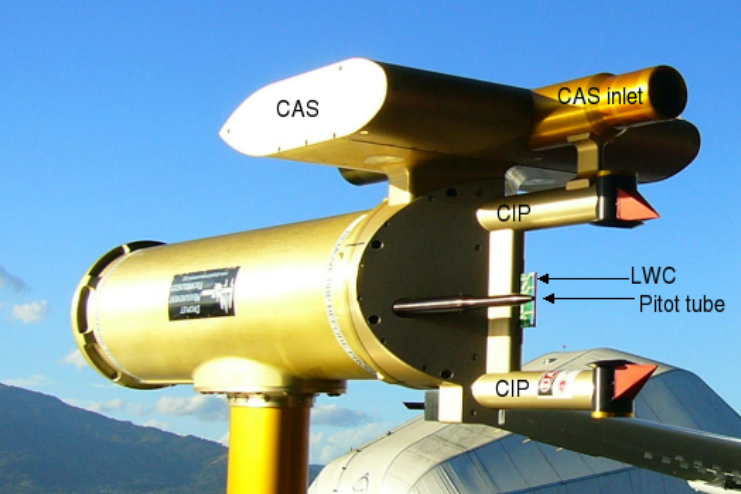 Instrument type: Optical imaging probe
Measured species: particle size distribution & number concentration & shape (CAS: 0.5 – 50 µm / CIP: 15 – 960 µm)
Mission participation: (TBA)
Instrument PI: FZ Jülich / Univ. Mainz
A combination probe using as Cloud Aerosol Spectometer (see above) and a CIPgs, which records 2-D shadow cast images of cloud elements that cross the individual CIPgs detection region.
Link to instrument webpage:
https://www.fz-juelich.de/de/ice/ice-4/ueber-uns/wissinfra/nixe-caps
References:
> Krämer, M., et al., (2020): A microphysics guide to cirrus – Part 2: Climatologies of clouds and humidity from observations, Atmos. Chem. Phys., 20, 12569–12608, doi: 10.5194/acp-20-12569-2020.
> Voigt, C., et al., (2017): ML-CIRRUS: The Airborne Experiment on Natural Cirrus and Contrail Cirrus with the High-Altitude Long-Range Research Aircraft HALO. Bull. Amer. Meteor. Soc., 98, 271–288, doi: 10.1175/BAMS-D-15-00213.1.
(Image: https://www.fz-juelich.de/de/ice/ice-4/ueber-uns/wissinfra/nixe-caps || Credit: FZ Jülich)
Instrument type: Optical imaging probe
Measured species: aerosol size distribution (0.12 – 3.5 µm)
Mission participation: (TBA)
Instrument PI: DLR-PA / Univ. Mainz
The PCASP employs a laser as its radiation source and the sample is sheathed in clean air as it enters the optical chamber. The laser is directed through the optical chamber across the sample and is incident upon a crystal oscillator where 0.1% of the in cident radiation passes through to a photodetector allowing measurement of the laser intensity and the remaining 99.9% is reflected back along the reciprocal path. The scattered light is collected by a parabolic mirror which collects light from the direct beam before a lens focuses it onto a photodetector.
References:
> Voigt, C., Kleine, J., Sauer, D. et al., (2021): Cleaner burning aviation fuels can reduce contrail cloudiness. Commun Earth Environ 2, 114, doi: 10.1038/s43247-021-00174-y.
> Voigt, C., et al., (2017): ML-CIRRUS: The Airborne Experiment on Natural Cirrus and Contrail Cirrus with the High-Altitude Long-Range Research Aircraft HALO. Bull. Amer. Meteor. Soc., 98, 271–288, doi: 10.1175/BAMS-D-15-00213.1.
> Rosenberg, P. D., et al., (2012): Particle sizing calibration with refractive index correction for light scattering optical particle counters and impacts upon PCASP and CDP data collected during the Fennec campaign, Atmos. Meas. Tech., 5, 1147–1163, doi: 10.5194/amt-5-1147-2012.
Instrument type: Optical imaging probe
Measured species: Particle size distribution & phase function (10 – 1.000 µm)
Mission participation: (TBA)
Instrument PI: KIT
PHIPS-HALO is a combination of a stereo scopic imager and a polar nephelometer to acquire (i) micro graphs of individual ice particles from two directions at an optical resolution of about 2.5µm and (ii) the polar scattering function of the same particle in the angular range from 1 to 170◦.
Instrument webpage:
https://www.realicecrystals.de/static/phips.php
References:
> Schnaiter, M., Järvinen, E., et al., (2016): Cloud chamber experiments on the origin of ice crystal complexity in cirrus clouds, Atmos. Chem. Phys., 16, 5091–5110, doi: 10.5194/acp-16-5091-2016.
> Schnaiter, M., Järvinen, E., Abdelmonem, A., and Leisner, T., (2018): PHIPS-HALO: the airborne particle habit imaging and polar scattering probe – Part 2: Characterization and first results, Atmos. Meas. Tech., 11, 341–357, doi: 10.5194/amt-11-341-2018.
> Waitz, F., Schnaiter, M., Leisner, T., and Järvinen, E. (2021): PHIPS-HALO: the airborne Particle Habit Imaging and Polar Scattering probe – Part 3: Single-particle phase discrimination and particle size distribution based on the angular-scattering function, Atmos. Meas. Tech., 14, 3049–3070, doi: 10.5194/amt-14-3049-2021.
Instrument type: Optical imaging probe
Measured species: Particle size distribution & particle shape ( 100 – 1.600 µm)
Mission participation: (TBA)
Instrument PI: DLR-PA / Univ. Mainz
The PIP detects precipitating cloud elements and hydrometeors by means of particle-induced shadow projection onto a diode sensor, allowing for a 2-D particle imaging similar to the CIPgs. In comparison to the CIPgs, the PIP setup features an increased detection volume that covers larger particle sizes with 100µm – 6400µm.
References:
> De La Torre Castro, E., et al. (2023): Differences in microphysical properties of cirrus at high and mid-latitudes, Atmos. Chem. Phys., 23, 13167–13189, doi: 10.5194/acp-23-13167-2023.
> Voigt, C., et al., (2017): ML-CIRRUS: The Airborne Experiment on Natural Cirrus and Contrail Cirrus with the High-Altitude Long-Range Research Aircraft HALO. Bull. Amer. Meteor. Soc., 98, 271–288, doi: 10.1175/BAMS-D-15-00213.1.
> Weigel, R., et al., (2016): Thermodynamic correction of particle concentrations measured by underwing probes on fast-flying aircraft, Atmos. Meas. Tech., 9, 5135–5162, doi: 10.5194/amt-9-5135-2016.
Instrument type: Optical imaging probe
Measured species: Particle size distribution & complexity (5 – 50 µm)
Mission participation: (TBA)
Instrument PI: KIT
The Small Ice Detector Mk 3 (SID-3) instrument captures the spatial light scattering pattern of individual aerosol and cloud particles. SID-3 uses an intensified charged-coupled device camera (ICCD) to get high-resolution images of these scattering patterns. In this way SID-3 does not only give the azimuthal modulation of the scattering pattern (which carries information on the particle shape) but also the polar modulation which is sensitive to the particle size.
References:
> Vochezer, P., Järvinen, E., Wagner, R., Kupiszewski, P., Leisner, T., and Schnaiter, M. (2016): In situ characterization of mixed phase clouds using the Small Ice Detector and the Particle Phase Discriminator, Atmos. Meas. Tech., 9, 159–177, doi: 10.5194/amt-9-159-2016.
Instrument type: Optical imaging probe
Measured species: Dry particle size distribution (60nm – 1 µm)
Mission participation: (TBA)
Instrument PI: DLR-PA / Univ. Mainz
The UHSAS-A is an optical particle spectrometer, measuring in the diameter range from 60nm to 1µm. The instrument laser operates at 1064nm and it collects the light scattered by individual particles over a large solid angle (22°–158°). From the detected scattered light, the particle size is inverted.
References:
> Voigt, C., et al., (2017): ML-CIRRUS: The Airborne Experiment on Natural Cirrus and Contrail Cirrus with the High-Altitude Long-Range Research Aircraft HALO. Bull. Amer. Meteor. Soc., 98, 271–288, doi: 10.1175/BAMS-D-15-00213.1.
(Measurement pronciple)
> Cai, Y. D.C. Montague, W. Mooiweer-Bryan, and T. Deshler (2008): Performance characteristics of the ultra high sensitivity aerosol spectrometer for particles between 55 and 800nm: Laboratory and field studies, Journal of Aerosol Science, 39, 759-769, doi: 10.1016/j.jaerosci.2008.04.00