
BAHAMAS 2.0, HALO’s new core measurement system, successfully completed its first flight on 11 April 2026 as part of an electromagnetic compatibility (EMC) test. The flight marks a major milestone towards final certification following nearly two years of development. First operational use is planned for the CoMet 3.0 Tropics campaign in July/August 2026.
On 11 April 2026, the new core measurement system BAHAMAS 2.0 (Basic HALO Measurement and Sensor System) successfully completed its first flight on the research aircraft HALO in Oberpfaffenhofen. The flight was conducted as part of an electromagnetic compatibility (EMC) test campaign and marks one of the final steps towards full certification.
BAHAMAS 2.0 is scheduled to see its first operational use during the CoMet 3.0 Tropics campaign (Carbon Dioxide and Methane Mission for HALO) in July/August 2026.
The approximately 2.5-hour flight concludes an intensive development, manufacturing, and certification phase carried out by the DLR Flight Experiments facility over nearly two years. BAHAMAS 2.0 replaces its predecessor, BAHAMAS 1, which has reached the end of its service life after 17 years of operation.
The system integrates data acquisition and an advanced sensor suite to measure key aircraft parameters as well as fundamental meteorological variables—such as pressure, temperature, wind, and humidity—with very high accuracy. These data form the common basis for all scientific experiments on HALO, placing particularly high demands on system accuracy and reliability.
The primary objective of the development was to maintain the proven quality level of the predecessor system while ensuring the long-term availability of high-precision baseline data. Once fully certified, BAHAMAS 2.0 will become an integral part of HALO, providing a comprehensive and reliable dataset on every flight.
While building directly on the established design of BAHAMAS 1, the new system incorporates extensive operational experience and numerous improvements. These include enhanced data acquisition components, newly developed sensors, updated interfaces, additional redundancies for critical data sources, improved system safety measures, and a completely revised software architecture. Given the scope of these changes, BAHAMAS 2.0 can be regarded as a new development requiring a comprehensive qualification and testing programme.
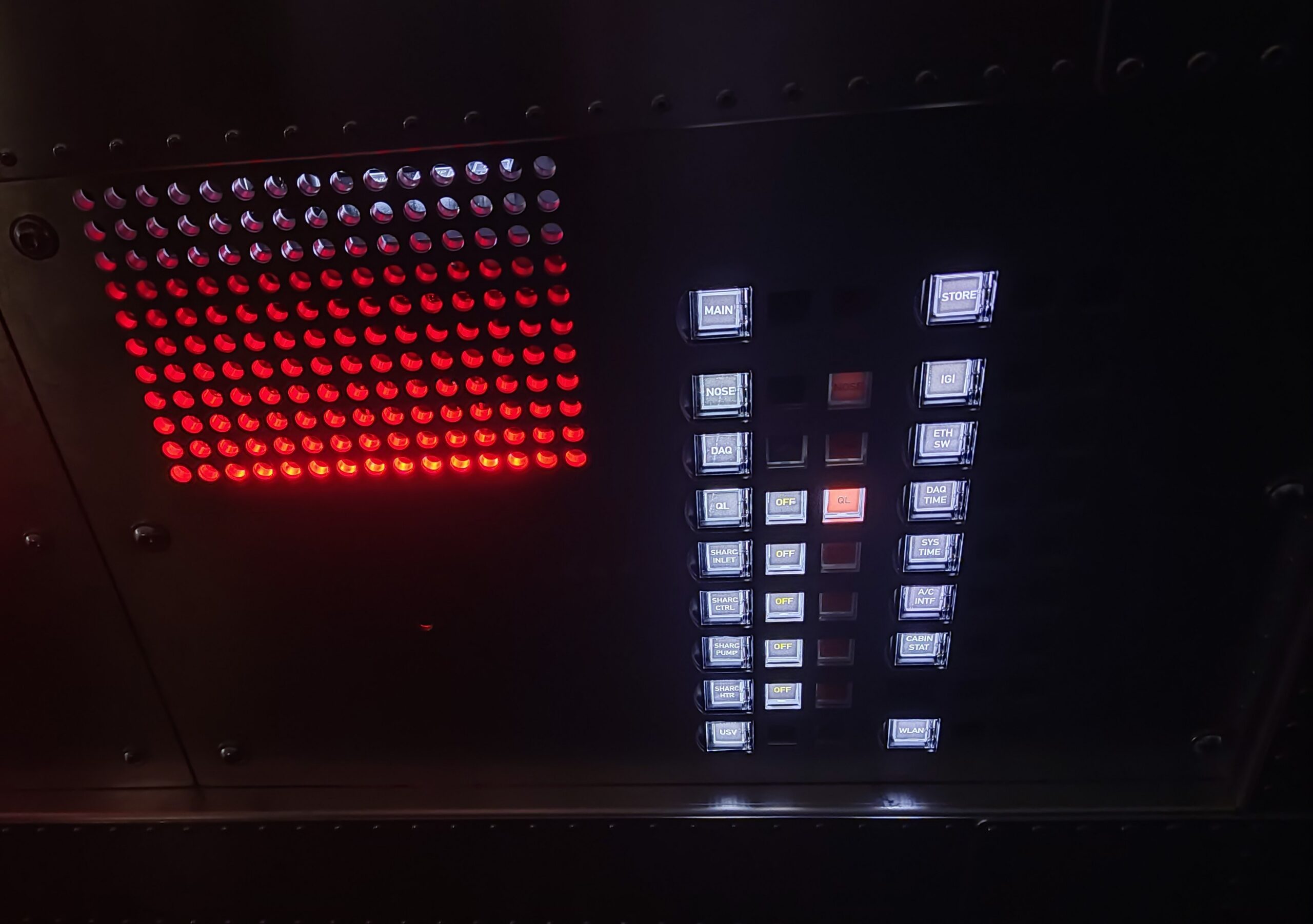
As with its predecessor, BAHAMAS is designed to operate autonomously without dedicated FX personnel on board. The system therefore provides clear and intuitive status information for the scientific crew. Controls and indicators have been completely redesigned in line with aviation standards, including direct feedback from software processes via an LED array. In addition, an innovative “traffic light” concept using illuminated air inlets provides a clear visual indication of the overall system status, ensuring that the crew can assess system health at a glance.
During its first flight, BAHAMAS 2.0 already operated with a functionality level comparable to the legacy system. Performance was stable throughout, including the successful demonstration of an in-flight system restart.
Further finalisation work, data analysis from the test flight, and certification activities will continue ahead of its deployment in the CoMet campaign.
Contact: Dr Andreas Giez, DLR Flight Experiments (FX), Scientific Project Lead
Further information
- Research report on the calibration of pressure measurements on HALO
Static Source Error Calibration of a Nose Boom Mounted Air Data System on an Atmospheric Research Aircraft Using the Trailing Cone Method
https://elib.dlr.de/145770/ - Calibration of airflow measurements on HALO using flight manoeuvres
Calibration of a Nose Boom Mounted Airflow Sensor on an Atmospheric Research Aircraft by Inflight Maneuvers
https://elib.dlr.de/215433/ - Determination of measurement errors in BAHAMAS data
Determination of the Measurement Errors for the HALO Basic Data System BAHAMAS by Means of Error Propagation
https://elib.dlr.de/193175/